 The world has spoken. The success of the Olympic games in London showed global support for ‘business as usual’, for a continuation of the march of society toward prosperity. We like this institution, and we want it in our future, and only a watermelon could argue with that. (Green on the outside, Red on the inside)
Who could deny the unbridled joy and exaltation of the thousands of athletes who have given their lives for a moment of glory. Some to fail, some to win, is this Andy Warhol’s “15 minutes of fame” ? Tears were shed on this side of the screen as hope and expectation turned rhythmically from dust to gold and back to dust.
But there was also a trace of sadness in the tears as the inevitability of Rio 2016 saw through the moments of joy to the accompanying inevitability of the “progress in train”.
 The ‘budget’ London Olympics (using many existing facilities), still cost £19 billion, to bring Brazil to the world stage will cost much more. Brazil is one of the ‘BRIC’ countries that have been experiencing high growth rates over the last 10 years. At present ‘ponzi scheme’ growth has slowed in Brazil as in China and India. Brazil is even borrowing failed policies from industrialised countries to provide “stimulus” to “keep the dream alive”.
SPOIL, THE COST OF RIO 2016.
Brazil plans to build 21 dams in the Amazon Basin to fuel and maintain the economic growth that has reportedly lifted 30 million Brazilians out of poverty, and provide the impetus to repeat the medicine for the remaining 60 million poor. The problem of the Rio+20 environment summit “encroaching” on these proposals can be seen as a very motivating factor in the abject failure of the summit to produce anything of ecological value, except for the following ;
“The expansion of trade with China can be infinite,” said Brazil’s Finance Minister Guido Mantega, as he announced a new bilateral deal on the sidelines of the Rio+20 sustainability conference. “China is fast growing and wants to stimulate consumption so they will continue to buy our commodities. There are no limits.”


The Rio+20 conference produced an “occupation” of the Belo Monte dam site by Indigenous Brazilians who will be severely impacted by the project, and went largely unreported due to the ‘predetermined’ Rio + 20 outcome It is the 3rd largest hydroelectric dam in the world
It was important for Brazil to be able to strut the world stage confidently with its contribution to “social well-being” established in its own country. But if the experience of South Africa hosting the World Cup is an indication of “developing”, it will be a disastrous experience.
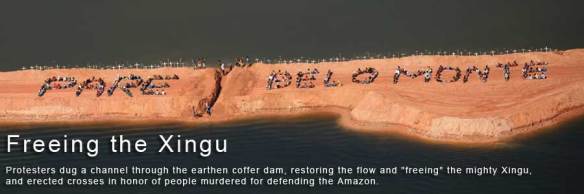
The indigenous leaders, representing the Xikrin, Juruna, Arara, Parakanã, Kuruaya and Kayapó tribes, are led an occupation by approximately 300 people at the main earthen coffer dam that cuts across channels of the Xingu River. The occupation began on June 21, in the midst of the Rio +20 conference, halting construction at the site. The majority of the occupiers come from a region of the Xingu downstream of Belo Monte that will suffer from a permanent drought provoked by the diversion of 80% of the river’s flow into an artificial dam to feed the powerhouse.
 We don’t seem to be speaking the same language . . . .
On the 15th August a group of judges from Brazil’s Regional Federal Tribunal (TRF1) upheld an earlier decision that declared the Brazilian Congress’s authorization of the project in 2005 to be illegal. The decision concludes that the Brazilian Constitution and ILO Convention 169, to which Brazil is party, require that Congress can only authorize the use of water resources for hydroelectric projects after an independent assessment of environmental impacts and subsequent consultations with affected indigenous peoples. http://amazonwatch.org/news/2012/0815-belo-monte-dam-suspended-by-brazilian-appeals-court
As well as the Olympics in 2016, Brazil is host to the 2014 FIFA World Cup. “President Dilma Rousseff will invest nearly $69 billion to improve transportation systems by the end of 2014. There are big demands on Brazil to improve its transportation systems before the nation hosts the 2014 World Cup and the 2016 Olympics. Brazil has long been beset by bottlenecks at its ports, railways, roadways and airports. Experts say that hobbles Brazil’s economic growth by making it difficult and costly to get the nation’s bountiful commodities to foreign markets.” http://www.brandonsun.com/business/breaking-news/brazil-69b-in-transportation-investments-by-2014-to-aid-economy-world-cup-olympics-166137436.html?thx=y

12.5% of the total freshwater in the world.
The 21 dams reflect the “trend” to hydroelectric power in ‘developing’ countries – (the Asian ‘Tiger’ economies are planning their future electricity needs on over 100 dams planned for the Mekong Delta) – and will cost Brazil almost $50 billion to construct by 2021. But Brazil which overtook the UK as the world’s sixth biggest economy last year, and is now the worlds leading exporter of soy beans and beef is now going all out for more economic growth. The Belo Monte dam will flood 500km2 of land in the Brazilian state of Para and displace at least 20,000 indigenous people, and is billed as a silver bullet to Brazil’s blackouts and as a means to bring power to people across the country, but a conservative estimate earmarks 40% of Belo Monte’s capacity for the mining industry.
President Lula da Silva began the dam process with Rousseff as his environment minister, since she became President environment laws have been wound backwards. She issued an executive order to shrink or repurpose seven protected woodlands, making way for hydroelectric dams and other infrastructure projects, and to legalize settlements by farmers and miners.
Brazil’s well-established environmental movement is aghast. Rousseff’s policies, they say, endanger the world’s largest rainforest, the storehouse of one-eighth of the planet’s fresh water, a primary source of its oxygen and home to countless rare and undiscovered plant and animal species, as well as tens of thousands of native tribespeople. The short-term economic gain, Rousseff’s critics say, isn’t worth the potential long-term cost to the global environment, as well as Brazil’s economy.
“This is a government willing to sacrifice the resources for thousands of years in exchange for a few decades of profit,” says Marina Silva, a former environment minister and a pioneer of Brazil’s green movement.
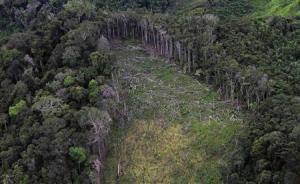 Rousseff recently touted figures showing that the rate of deforestation in the Amazon fell to a record low in the 12 months ended July 2011, the most recent yearlong period for which data is available. Total land cleared – about 6,400 square kilometers, was down 77 percent from 2004, a trend that preliminary data suggests has continued in recent months. The Brazilian Amazon is home to 40% of the world’s tropical forest and one of the most biodiverse regions on the planet. About 54% of the area is under environmental protection, and in the past five years, stricter controls and better compliance have driven deforestation rates down to a historical low. The push for economic development, reversing protection for areas in the Amazon Basin, approving hydroelectric projects and removing federal officers who police the Brazilian Forest Code will see a reversal of that trend.
A recent report by the University of East Anglia has identified Jaguars, tapirs, giant  anteaters and spider monkeys have become “virtually extinct” in Brazil’s Atlantic forest, while other species are being lost faster than previously believed due to the fragmentation and emptying of the once dense canopy by farmers and hunters. The authors of the study say their findings have global implications for conservation because they confirm the quantity of forest cover is an unreliable indicator of biodiversity – more important is the quality of the forest and the measures taken to protect the fauna within it.
The two-year research project, which was led by the University of East Anglia, looked for signs of 18 mammal species in 196 fragmented areas of forest. They found little more than a fifth of the 3,528 possible mammal populations. White-lipped peccaries, a native pig species, were completely wiped out. Many others were on the brink of disappearing.
“We uncovered a staggering process of local extinctions of mid-sized and large mammals,” said Gustavo Canale of the State University of Mato Grosso, which was a partner on the study which is published in the journal Plos One.
About 90% of the original Atlantic forest, which once covered an area of about 1.5m km sq (about six times the size of Britain) has been converted to agriculture by cattle ranchers, cocoa farms and rubber plantations.
The focus of the study was on the thousands of clumps of forest – many no bigger than a football pitch – that were left behind. Together they add up to a sizeable area, which previously prompted some scientists to assume they may provide a viable habitat for wildlife.
However, the authors of the new research say that no matter how pristine forest fragments appear from the outside, they are quickly emptied of all but the smallest creatures due to “edge effects” which make fauna more vulnerable to fire and hunting.
Forest clearing has already claimed casualties, but the animals lost to date in the rainforest region are just one-fifth of those that will slowly die out as the full impact of the loss of habitat takes its toll. In parts of the eastern and southern Amazon, 30 years of concerted deforestation have shrunk viable living and breeding territories enough to condemn 38 species to regional extinction in coming years, including 10 mammal, 20 bird and eight amphibian species.
Writing in the journal Science, Robert Ewers and his co-authors reconstructed extinction rates from 1970 to 2008, and then forecast future extinction debts
“For now, the problem is along the arc of deforestation in the south and east where there is a long history of forest loss. But that is going to move in the future. We expect most of the species there to go extinct, and we’ll pick up more extinction debt along the big, paved highways which are now cutting into the heart of the Amazon”.
Let the Games begin.
http://www.reuters.com/article/2012/08/03/us-brazil-environment-backslide-idUSBRE8720GP20120803
http://www.guardian.co.uk/environment/2012/jul/12/amazon-deforestation-species-extinction-debt
http://www.guardian.co.uk/environment/2012/aug/14/jaguar-species-virtually-extinct-brazil


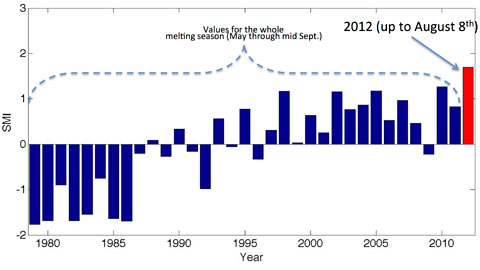
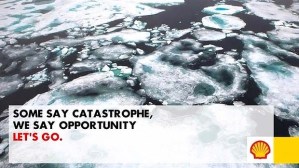 Greenpeace activists have chained themselves to anchor lines preparing to launch Shell’s Arctic exploration. This seasons ice melt has been calamitous, with outcomes for the coming decades, which the 2007 I.P.C.C. reports put “towards the end of the century”.



 “Get big or Get out” was a mantra which drove the post war food industry where “supply security” was the focal point of farming. Theoretically the trickle down of this global prosperity and green revolution can feed the world, at population levels of “the last century”. However, over 1 billion people still remain below the poverty line ($1.25 per day) and another 2 billion are said to be below what western society would call a “subsistence” level. There has been a stark reminder that the rules applying to “last century”, no longer apply as the world adds 1 BILLION people to the planet every 12 years. Genetically modified organisms are now being touted to be the scientific answer, pushing food production into the realm of science fiction, and food monopolies into the bank balances of global corporations. Not only is the thought of the existing 7 billion becoming 9, 10 or more billion challenging enough, even with GMO, but no one has had a real handle of what effects a warming planet will add to the mix.


 No place like home.